
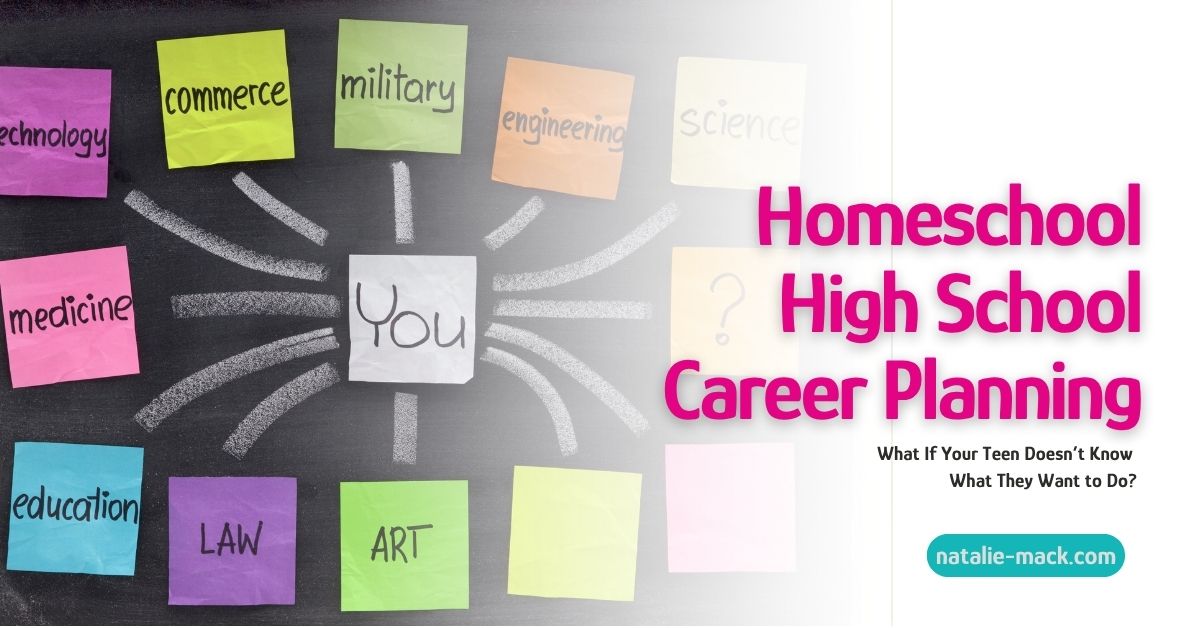
“What do you want to be when you grow up?” It sounds like an innocent question. But somewhere around the beginning of high school, that question can start to feel a lot heavier. Suddenly, our teenagers are hearing about college majors, career paths, dual enrollment, AP classes, internships, military service, athletics, and everything they’re supposedly supposed to accomplish before graduation.
And as homeschool parents, we can feel that pressure too. We want to prepare them well. We don’t want to close doors. We don’t want to discover during senior year that there was something we should have done in 9th grade.
But here’s something I want us to remember: Your 14-year-old doesn’t need to know what they want to do with the rest of their life.
High school doesn’t have to be 4 years of racing toward a destination they haven’t chosen yet. It can also be a time to explore.
Does My Homeschool Teen Need to Choose a Career in High School?
No. Your homeschool teen doesn’t need to choose a career while in high school.
Some students do have a strong sense of direction early. They may have wanted to become a veterinarian, engineer, teacher, entrepreneur, or something else for years. Many teenagers don’t.
I love to picture these years as a blank canvas. High school is a time when our students are becoming more confident in who they are. They’re developing their voices, discovering interests, learning to advocate for themselves, and beginning to think more seriously about life after graduation.
They don’t have to figure it all out at once. Instead, we can help them build a strong foundation while giving them room to explore.
Why Career Exploration Matters for Homeschool High School Students
Career exploration isn’t the same thing as choosing a career. We’re not asking our 14-year-olds to decide what they’ll do for the next 50 years.
We’re helping them pay attention to themselves.
- What are they curious about?
- What are they naturally good at?
- What environments help them thrive?
- How do they like to learn?
- What problems interest them?
- What kind of work sounds interesting?
- What difference would they like to make?
These conversations can help our teenagers understand themselves better. And homeschooling gives us a wonderful opportunity to take what we’re learning about our students and turn it into real experiences.
How Homeschooling Gives Teens More Room to Explore Career Options
One of the benefits of homeschooling high school is flexibility. Yes, academics matter. We want to build a sound academic foundation. But academics don’t have to take up every available hour. Passions and interests are important, too.
Our students can also explore interests through:
- Volunteer opportunities
- Internships
- Extracurricular activities
- Part-time work
- Entrepreneurship
- Community involvement
- Electives
- Online classes
- Dual enrollment
- Independent projects
- Hobbies and personal interests
Sometimes an interest begins with something that seems very small. I saw that with my youngest son. We were checking out at the commissary one day when the bagger asked whether I wanted paper or plastic. I said plastic. My son immediately had something to say about that! He started talking about where plastic ends up and its impact on marine animals. I remember thinking, okay, there’s something here.
That interest in conservation mattered. Today, he’s studying environmental sustainability in college.
That doesn’t mean every interest your teenager mentions will become their college major or career. It means we should pay attention. Curiosity can tell us something. Give your teenager opportunities to follow some of those threads and see where they lead.
What If Your Homeschooler Changes Their Mind About a Career?
They might. In fact, discovering what they don’t want to do can be a valuable part of homeschool high school career exploration. Maybe your teenager completes an internship and realizes the career isn’t anything like they imagined. Maybe they take a class they thought they would love and discover it isn’t a good fit. Maybe they spend 2 years interested in one path and then discover something completely different.
That time wasn’t necessarily wasted. They learned.
If a 16- or 17-year-old changes direction, that doesn’t mean the homeschool high school plan failed. That is part of high school. Our teenagers are developing, exploring, and learning more about themselves. We want to give them room to do that.
How Can We Keep College, Career, Military, and Other Options Open?
Giving teenagers room to explore doesn’t mean we stop preparing for their future. There’s a balance.
I want families to think about creating a sound academic foundation while also keeping possible post-high-school pathways in mind. Some pathways require earlier or more specific preparation. For example, students considering NCAA athletics, military service academies, or certain colleges may need to pay attention to specific requirements during high school. Other students may be considering community college, dual enrollment, a four-year university, military service, entrepreneurship, or another career pathway.
Your teenager may also change their mind. That’s one reason I encourage parents to build a solid academic foundation and maintain a high school transcript, even when a student currently says they don’t plan to attend college. Plans change.
A student may enter the workforce and later discover that advancing in their chosen field requires a degree. Keeping good records and making thoughtful academic choices can give your student more options later.
Requirements for college admissions, NCAA eligibility, military pathways, and state homeschool laws can change, so be sure to confirm current information with the appropriate official organizations before making decisions for your student.
5 Questions to Help Your Homeschool Teen Explore Their Future
Career planning doesn’t have to begin with, “What are you going to be?” Try starting with conversation instead.
1. What is your child curious about?
Notice what your teenager researches, reads about, talks about, or wants to understand.
2. What does your child enjoy doing?
Interests don’t automatically equal careers, but they can give you clues about opportunities worth exploring.
3. What kind of environment helps your child thrive?
- Does your student enjoy working with people?
- Do they prefer independent work?
- Are they energized by hands-on projects?
- Do they enjoy being outdoors?
Understanding the environment can sometimes be just as useful as identifying a particular career.
4. How does your child learn best?
Some students love textbooks and independent study. Others thrive through discussion, hands-on experiences, service, simulations, or real-world learning. Help your teenager begin recognizing how they learn.
5. What would your child like to try?
This may be the most helpful question of all.
Instead of requiring your teenager to choose a destination, help them identify a next step:
- A course.
- An internship.
- A volunteer opportunity.
- A project.
- A conversation with someone working in an interesting field.
Exploration can begin small.
When Should Homeschool Career Planning Start?
You can begin having exploratory conversations before high school without turning them into high-pressure decisions. Middle school can be a wonderful time to notice interests, strengths, and learning preferences. As students enter ninth and tenth grade, conversations about life after high school can gradually become more purposeful.
- If your teenager expresses interest in college, you can begin looking at college preparation.
- If they’re interested in college athletics, you can research current NCAA requirements.
- If military service interests them, you can explore the different military pathways.
- If they’re interested in a particular career, help them learn more about it.
The goal isn’t to lock them into a decision but instead to give them information and experiences that help them make increasingly informed decisions as they mature.
Preparing Your Homeschooler for Life After High School Without the Pressure
One of the biggest mistakes we can make in homeschool high school career planning is planning from fear. We see another teenager taking multiple AP classes and wonder if ours should too. Someone talks about dual enrollment and suddenly we think we’re behind. We hear what a college applicant accomplished and start adding more activities to the schedule.
Before long, our student’s homeschool experience is being driven by what everyone else is doing rather than what actually fits our teenager.
Instead, ask:
- Does this fit my student?
- Does it fit them academically?
- Does it fit our family?
- Does it fit financially?
- Does it support where they might be going?
- Are they ready for it?
We can prepare our teenagers well without creating a pressure cooker.
Your Teen Doesn’t Have to Know Yet
If your homeschool high school student doesn’t know what they want to do after graduation, keep exploring. Keep talking. Pay attention to their interests. Give them opportunities to try things. Build a sound academic foundation. Keep good records. Research specific requirements as their possible pathways become clearer. And leave room for the plan to change.
High school can be a blank canvas. Our job isn’t to paint the entire picture for our teenagers. We get to help them discover what they want to create. Your homeschool can be flexible and still be strong.
Watch my full conversation about how to homeschool high school with confidence on The Christy-Faith Show. It’s part 1 of 4, so stay tuned for more.

I’m a homeschool mom of five—four college graduates and one college freshman—with over 23 years of homeschooling experience. Through Homeschool Natalie Mack LLC, I help parents navigate the homeschool journey with confidence, especially through the high school years, college prep, and NCAA eligibility.
I’m also the founder and Executive Director of the Military Homeschoolers Association (MHA), where I advocate for military homeschool families around the world. As a TEDx speaker, former therapist, and national homeschool leader, I’m passionate about helping families see that homeschooling isn’t just about academics—it’s about building legacy, purpose, and lifelong learners.