
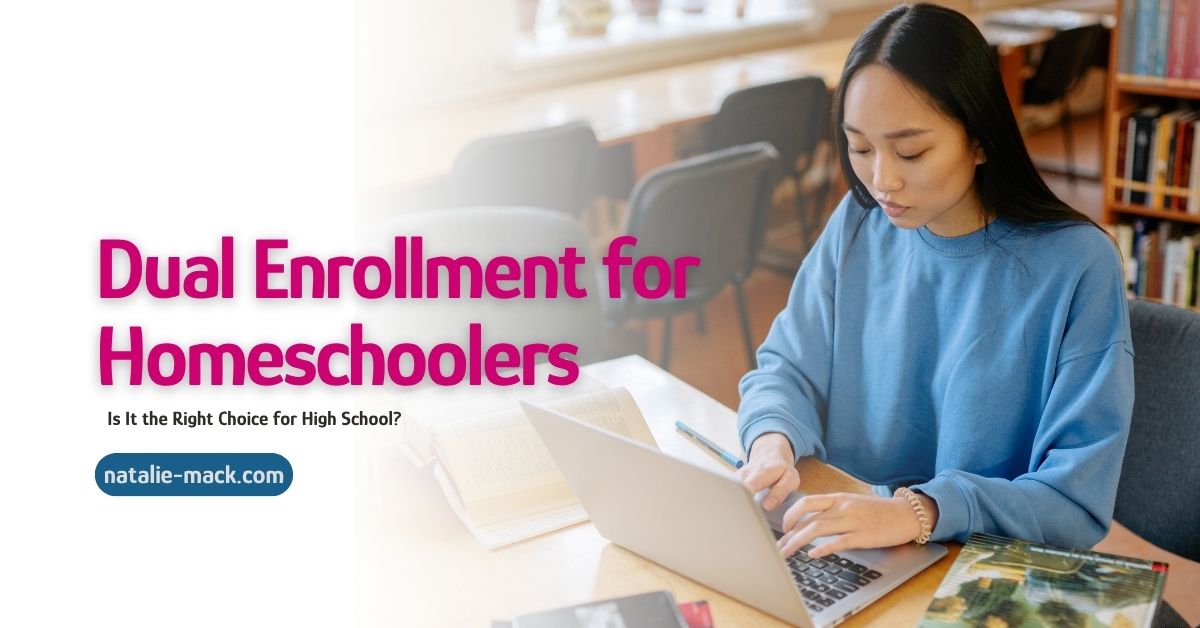
If you’re homeschooling through high school, chances are you’ve come across the term dual enrollment. It’s often talked about as a smart way to get ahead, but is it actually the right choice for your teen?
Dual enrollment can be a valuable option for some homeschoolers, offering both academic challenge and a head start on college. But it also comes with added responsibility and isn’t the best fit for every student. Understanding what it involves (and how it impacts your homeschool high school plan) can help you make a more confident decision.
What Is Dual Enrollment?
Dual enrollment allows high school students to take college-level courses while still completing their high school education. These are not simplified or adapted classes. They are real college courses, often taught by college instructors, and they typically count toward both a high school diploma and future college credit.
For many homeschool families, this can feel like an exciting opportunity. It offers a way to bridge the gap between high school and college while giving students a taste of what higher education will actually require.
Why Families Choose Dual Enrollment
One of the biggest draws is the ability to earn college credit early. This can reduce the overall cost of a college degree and, in some cases, allow students to graduate sooner.
Beyond the practical benefits, this path can also provide a level of academic challenge that some students are ready for. Homeschooled teens who are motivated and academically prepared may thrive when given the opportunity to engage with more advanced material.
There’s also the added benefit of strengthening a college application. Admissions offices often look for evidence that a student can handle rigorous coursework, and dual enrollment can demonstrate that clearly.
The Reality Behind the Opportunity
It’s important to approach dual enrollment with realistic expectations.
College courses require a higher level of independence, discipline, and time management. Students are expected to keep up with assignments, meet deadlines, and communicate directly with professors. For some teens, this is a natural next step. For others, it can feel overwhelming.
There’s also the question of balance. Adding college coursework on top of existing high school responsibilities can create a heavy workload. Without careful planning, students may find themselves stretched too thin, which can lead to frustration or burnout.
For families, logistics can also play a role. Some programs require travel to a campus, while others are offered online. Costs vary as well, with some programs being free or subsidized and others requiring tuition.
How to Know if Dual Enrollment is the Right Fit for Your Homeschool
The decision to take these kind of courses should be based on your individual student.
Consider:
- Is your student academically ready and motivated?
- Can they manage deadlines independently?
- Do they want to pursue this path – or do they feel pressured or expected to?
- Does your family have the capacity to support the added workload?
A student who is academically capable but not yet ready to manage their time independently may struggle in a dual enrollment setting. On the other hand, a student who is motivated, organized, and eager for more challenge may thrive.
It’s also important to evaluate your family’s overall capacity. Supporting a student through dual enrollment may require additional oversight, especially in the beginning, as they adjust to higher expectations.
Most importantly, your student should have a genuine interest in pursuing this path. When the motivation comes from within, the experience is far more likely to be positive.
There’s More Than One Path
While dual enrollment can be an excellent option, it’s only one of many ways to approach homeschool high school.
Some students benefit more from a customized curriculum, hands-on experiences, or opportunities like internships, volunteer work, or entrepreneurship. Others may take a slower academic pace or explore different post-secondary pathways altogether.
There is no single formula for success. The goal is to create an education that prepares your student for their future – not one that simply checks boxes.
Dual enrollment can open doors, build confidence, and provide meaningful academic experience. But it works best when it aligns with your student’s readiness, interests, and long-term goals.
If you’re considering it, take the time to explore your options, ask questions, and evaluate what will truly support your child’s growth. And consider joining my homeschool High School Decisions Bootcamp for more help.
Watch the full video below for a walk through the realities of dual enrollment, including the benefits, the challenges, and how to determine if it aligns with your child’s needs:
Frequently Asked Questions About Dual Enrollment
Dual enrollment allows homeschool students to take college-level courses during high school and earn credit toward both their diploma and a future degree.
No, it is not required for college admission. Many homeschoolers are accepted to college without it, though it can strengthen an application.
Look for signs of independence, strong time management, and the ability to handle more advanced academic work. Readiness is about maturity as much as academics.
In many cases, yes. Some programs offer reduced or free tuition, allowing students to complete credits before attending college full-time.
Yes, many colleges offer online courses, making it easier for homeschool families to participate regardless of location.

I’m a homeschool mom of five—four college graduates and one college freshman—with over 23 years of homeschooling experience. Through Homeschool Natalie Mack LLC, I help parents navigate the homeschool journey with confidence, especially through the high school years, college prep, and NCAA eligibility.
I’m also the founder and Executive Director of the Military Homeschoolers Association (MHA), where I advocate for military homeschool families around the world. As a TEDx speaker, former therapist, and national homeschool leader, I’m passionate about helping families see that homeschooling isn’t just about academics—it’s about building legacy, purpose, and lifelong learners.